

Understanding Higher Highs and Lower Lows in Forex Trading
If you strip trading down to its core, everything comes back to one thing: price movement. Indicators and strategies are helpful, but the real skill in forex trading is learning how to read price directly from the chart. One of the most important foundations of this skill is understanding higher highs and lower lows, especially through candlestick charts like those used when trading EUR/USD.
In this guide, you’ll learn what higher highs and lower lows mean, how to identify them using candlesticks, and how to apply them in real trading.
What Are Higher Highs and Higher Lows?
In an uptrend, the market moves upward in a step-like pattern. This pattern is defined by:
- Higher Highs (HH): Each new peak is higher than the previous one
- Higher Lows (HL): Each pullback stays above the previous low
This structure shows that buyers are in control. Even when price pulls back, it doesn’t fall as far as before.
EUR/USD Uptrend (Candlestick Example)
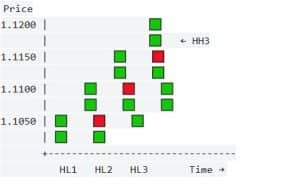
Explanation:
- Green candles show bullish movement (buyers pushing price up)
- Red candles show pullbacks (temporary selling pressure)
- Each pullback forms a Higher Low (HL)
- Each upward push creates a Higher High (HH)
This is a healthy uptrend, and traders look to buy at Higher Lows, not at the top
What Are Lower Lows and Lower Highs?
In a downtrend, the market moves downward. This pattern is defined by:
- Lower Lows (LL): Each new bottom is lower than the previous one
- Lower Highs (LH): Each upward retracement fails to reach previous highs
This shows that sellers are in control, and buyers are unable to push price higher.
EUR/USD Downtrend (Candlestick Example)


Explanation:
- Red candles dominate, pushing price downward
- Green candles are weak pullbacks
- Price keeps forming Lower Highs (LH) and Lower Lows (LL)
This is a clear downtrend, and traders look to sell at Lower Highs
Why This Concept Matters
Understanding higher highs and lower lows helps you:
1. Identify the Trend
- Uptrend → Look for buying opportunities
- Downtrend → Look for selling opportunities
- No structure → Stay out
2. Improve Entry Timing
Instead of guessing:
- Buy at Higher Lows (HL)
- Sell at Lower Highs (LH)
This improves your risk-to-reward ratio significantly.
3. Avoid Costly Mistakes
Many beginners:
- Sell in an uptrend
- Buy in a downtrend
Understanding structure keeps you trading with the market, not against it.
Trend Reversal (Break of Structure)
Trends don’t last forever. A key signal of change is when structure breaks.
 What this means:
- The market was making higher highs and higher lows
- A strong bearish (Red) candle breaks below a Higher Low
- This signals a possible reversal to a downtrend
How to Apply This on Real Charts (EUR/USD)
When you open EUR/USD on platforms like Trading View or MT4:
- Look for clusters of green candles pushing upward
- Watch how price pulls back with red candles
- Mark the highs and lows mentally or with lines
- Ask:
- Are highs getting higher?
- Are lows getting higher?
If yes → Uptrend
If opposite → Downtrend
Tired of losing trades? Open a Libertex account to start trading stocks and forex with the professionals today.
Pro Tips for Beginners
- Don’t rush trades wait for clear structure
- Combine structure with candlestick signals
- Focus on clean charts (less indicators)
- Practice on one pair like EUR/USD before switching
Simple Strategy Using Structure
Buy Setup (Uptrend):
- Identify higher highs and higher lows
- Wait for a pullback (Red candles)
- Enter when bullish candles (Green) return
- Place stop loss below the previous low
Sell Setup (Downtrend):
- Identify lower highs and lower lows
- Wait for a retracement (Green candles)
- Enter when bearish candles (Red) return
- Place stop loss above the previous high
Final Thoughts
Higher highs and lower lows are the foundation of technical analysis. When combined with candlestick behavior, they give you a powerful way to understand market direction without relying on complex indicators.
Master this concept, and you’ll start to see the market differently not as random movement, but as a structured story of buyers and sellers fighting for control.
Focus on this skill, practice consistently, and you’ll build a solid base for becoming a confident forex trader. You can also read; Building a Winning Trading Mindset: Master Discipline and Long-Term Success
Thank you for taking the time to read. Follow for the latest news and informationtelegram