
The United States Dollar: What Is It?
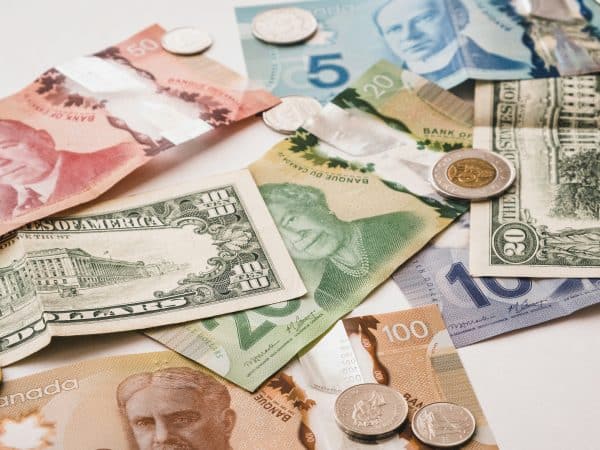
United States of America monetary policy recognises the USD (United States dollar) as its legal tender.
The U.S. dollar (U.S. Dollar), also known as the buck, consists of 100 cents. It is distinguished from other dollar-based currencies by its symbol, $ or US$.
The United States dollar is widely accepted as a standard of value in international trade and commerce.
In addition, many countries and territories outside the United States use it as their official currency, while others use it unofficially alongside their own.
KEY POINTS
- The United States dollar (USD) is recognised as legal tender in a number of jurisdictions outside the United States.
- The history of the United States dollar, the world’s most popular currency, is long and interesting.
- The US dollar is a major player in international trade and finance, earning it its own index, the USDX.
- The US dollar is used in the vast majority of international currency transactions.
- The US dollar is widely regarded as the most stable currency in circulation today.
How to Make Sense of US Dollars
The Coinage Act of 1792 established the value of the United States dollar (or “greenback”) as 371 to 416 grains of silver and the value of the “eagle” (US$10) as 247 to 270 grains of gold.
In this system, quantities were expressed in terms of the weight of a certain number of gold coins.
By doing so, we can help guarantee that the value of one dollar will always be equal to the value of one ounce of gold or silver.
In order to pay for the Civil War, the first greenbacks were printed and circulated as demand notes in 1861.
“Greenbacks” got their name because of their currency’s distinctive green hue.
The first “United States Notes” were printed in 1862, and the central printing press for these notes was set up in 1869.
In 1913, the United States established a national banking system and the Federal Reserve System, which led to the widespread adoption of non-interest bearer notes in a system of competing local currencies.
All you need to know about the New York Stock Exchange (NYSE)
U.S. Dollars (USD) and Gold
The process by which the USD became delinked from gold took a long time.
When the government stopped redeeming paper currency for gold in 1933, citizens were obligated to turn over their gold at a price of $20.67 per troy ounce. By January 1934, the price had been raised to $35.
The dollar’s gold value was lowered, but this change was restricted to use in foreign trade. This partially gold standard had become untenable by the 1960s.
Gold reserves as a guarantee against Federal Reserve notes were done away with in 1968.
It was announced in 1971 that the United States would no longer allow the free conversion of dollars at the exchange rate with gold.
The dollar lost all of its value in relation to gold in 1972 and 1973. In October 1976, Congress legally severed the dollar’s link to gold by removing the dollar’s gold-based definition.
The Worldwide Importance of the USD (U.S. Dollar)
The dollar is the most widely used currency. 88% (out of 200% because of two-sided currency pairs) of all foreign-exchange trades involved the US dollar, according to the Bank of International Settlements’ 2022 Triennial bank survey.
Only 31% of all purchases were made in euros. The USDX measures the value of the U.S. dollar relative to a group of other currencies including the euro, the Japanese yen, the British pound, the Swiss franc, the Swedish krona, and the Canadian dollar.
Moreover, the U.S. dollar is the legal tender in Puerto Rico, Guam, and the U.S. Virgin Islands, among other U.S. possessions.
The US Dollar’s (USD) Shifting Status in International Finance.
The question of whether or not the US dollar is losing its prominence on the global stage is one that is constantly debated.
This theory is supported by developments like the rise of the euro and China’s growing role in the international economy.
However, this is still largely unproven, and numerous studies indicate that the dollar’s strength on international markets persists, in no small part due to the size and stability of the U.S. economy, the currency’s current widespread use, and the fact that oil and other commodities are priced in dollars.
What does USD mean?
The three-letter code for the U.S. dollar is USD. In addition to being accepted everywhere as legal tender, the US dollar is a key trading and investment currency around the world.
What’s $1, Really?
There are many disparaging terms for the one dollar bill. The buck is also known as the greenback, bones, or even just the single.
Trade currency pairs on Libertex today with a 100% bonus and stay connected for upto date updates
Which Currencies Have the Highest Volume of Global Trade?
The top 10 account for ninety percent of all Forex transactions. U.S. dollars (USD), Euros (EUR), Japanese yen (JPY), British pounds (GBP), Australian dollars (AUD), Canadian dollars (CAD), Swiss francs (CHF), Chinese renminbi (CNH), Hong Kong dollars (HKD), and New Zealand dollars (NZD) are among them.
Conclusion
The United States Dollar is the most traded currency worldwide and the most reliable store of value.
In many emerging market countries, the US dollar is accepted as a means of currency despite the fact that it is not the official currency there.
A lot of stores and vendors will gladly take dollars instead of their own currency.
Follow for the latest news and information Telegram Channel